Despite being Cape Verde’s capital island, Santiago is often overlooked by tourists. The all-inclusive resort island of Sal tends to grab all the attention — but if you’re seeking culture, history, and more low-key beaches, Santiago is the better place to go. And while other islands are more focused on a specific activity (such as Santo Antão for hiking), Santiago offers a little bit of everything.
I arrived in Santiago just months after Easyjet started flying there, becoming the first budget airline to link the island directly to Europe. When speaking with local guides, I felt an air of anticipation and a hope that more foreign travellers will discover their home island. It remains happily free of crowds, and I especially loved the north where great hiking and natural beaches are both within arm’s reach.


While accessibility has now greatly improved, I found that independent travel info still barely exists, especially for hiking the Malagueta Mountains. I spent a week on the island, putting together the research for this travel guide, which includes some details I’ve not seen shared elsewhere yet.
While my favorite islands for hiking and outdoor adventure are the smaller Ilha de Fogo and Santo Antão, the variety and accessibility of Santiago Island make it easy to recommend, especially as a puzzle piece in a Cape Verdean island-hopping itinerary.
Arrival in Praia city
Most visitors will start in Praia, and I’ll be honest — it’s not the main reason to come to Santiago. But it works well as a launching pad, and there are a few things worth seeing while you’re here.
Praia means ‘beach’ in Portuguese, though Cape Verde’s capital is more of an administrative hub than some palm-tree paradise. Most of the streets are straight and orderly and certain areas, like Achada Santo Antonio, remind me of the modern suburbs of Lisbon — the bits tourists don’t usually visit.

While I much prefer the charms of smaller beach- and mountain towns in Cape Verde, it’s still a decent starting point. The walking street in Plateau gives a good introduction to the African-Portuguese atmosphere and the lively central market can be very interesting to check out.
However, the city beaches didn’t stir much enthusiasm in me. I should also mention that certain areas of Praia also suffer from safety issues. I was warned of this by two taxi drivers as well as a traveller I met who had his phone stolen here. For what it’s worth, I didn’t find Praia unwelcoming (and I still think it’s worth spending a day here), but you may want to guard your belongings in busy places.
I’ll focus here mostly on how to use Praia as a connecting node on a layover or as your starting point for a Santiago trip.
Arrival: I must first tip my hat to Praia’s Nelson Mandela International Airport for being astonishingly efficient. If you’ve pre-registered for a visa-on-arrival, you can simply scan your passport at the gates and be granted instant passage. I was then immediately approached by a salesperson offering local SIM cards and was treated to the fastest SIM card setup I’ve ever seen. I was out of the terminal and ready to go in less than 15 minutes.
Getting to Praia: As developed as the airport is, so undeveloped is the transportation from it. With no public transport options available at all, taxis are the only way. Rates to- and from the airport are regulated at 1500 CVE during the day and 2000 CVE at night. That’s about three times what a similar 10-minute trip would cost elsewhere in Praia. It felt a little unwelcoming to me, especially since I had to transit through Praia thrice, but it is what it is.
Where to stay in Praia: Between my Santiago trip and a previous layover, I’ve now stayed in 3 different areas in Praia. My first recommendation is the most obvious: the neighborhood known as Plateau. It has a small grid of mostly low-rise houses, some of them colorful historical buildings, and there’s a long traffic-free walking street. It’s a short walking distance to the city beaches, the pickup points for aluguers (minibuses), and it’s an 8-minute drive to the ferry terminal. You can find various budget apartments dotted around this area, though the more stylish option is Pousada Praia Maria.
My second choice for where to stay would be Achada Santo Antonio, a quiet neighborhood home to the national parliament. Being the main diplomatic quarter it’s very safe here. I’ve stayed at Kaza Awa Urban Guesthouse, offering clean and comfortable rooms in an apartment building, with self-check-in available should you have a late arrival.
If you’re backpacking, then easily your best pick is the cosy Meeting Point Hostel. It’s run by a super friendly American owner with Cape Verdean roots and it has all the essential ingredients of a true traveller hostel. (It currently only has 9 reviews on Hostelworld, but don’t let that throw you off! The hostel switched locations, resetting the reviews, but they’ve actually been around for years.)
Things to do in Praia:
Appreciate the history in Cidade Velha
Leaving Praia, it’s just a short hop to the much more compelling Cidade Velha (meaning “old city”). Founded in 1462 by Portuguese traders and listed as a UNESCO World Heritage site, this village is the oldest settlement in Cape Verde and its former capital.
On a purely aesthetic level, you can enjoy this nice village which has many historical buildings, including a beautiful church from 1495, an old fort, and a cozy street lined with single-story colonial-era dwellings — the oldest street in Cape Verde. It’s small but genuinely charming.
Beyond its looks, Cidade Velha gets a lot more interesting once you understand the history. Cape Verde was unpopulated until the Portuguese arrived, who made it the first European colony in the tropics. The settlement soon took a darker turn, as the islands became a key staging area for the slave trade.

Enslaved people were brought here from mainland Africa before being sent to the new world, mostly to Brazil. Slaves from Cape Verde would command a higher price, as they had already survived the trip to the archipelago and had been ‘broken in’ here and taught to obey Portuguese commands.
In what is today a cozy shaded square in Cidade Velha with several stalls selling souvenirs and colorful clothes, you can still see a white pillar called the Pelourinho. This actually marks the spot where rebellious slaves were punished by public whipping.
Apart from its dark history, Cidade Velha also represents the birth of what became Cape Verde’s unique culture, giving it a double significance. The meeting and mixing of many ethnicities here led to the first mixed-race Creole society as well as the Creole language, a blending of Portuguese with several West African languages.


You can easily explore Cidade Velha on foot. Entry to Cidade Velha itself is free, though you’ll pay small fees to enter specific monuments: the São Filipe Fort (Fortaleza Real de São Filipe) perched on the clifftop costs around 200 CVE (roughly €2). There’s a small visitor center near the Pelourinho that displays artifacts and has basic information panels (in Portuguese and some English). There are several restaurants by the waterfront where you can grab lunch with a lovely view of the ocean.
How to get there: Shared minibuses depart from Sucupira Market in Praia. Just say you want to go to Cidade Velha and someone will surely usher you to a waiting minibus. The trip takes around 20-30 minutes and costs around 100 CVE one-way. Since I was in more of a hurry going back, I grabbed a taxi which cost 1000 CVE one way.
A statistic that I found mindblowing when I first learned of it is that of all the Africans captured and sent to the Americas, ‘only’ 3% ended up in the United States, while almost 45% went to Brazil.
I’ll let that sink in for a moment. It’s a number that can be eye-opening, especially if (like me) you are mainly familiar with the American side of this history.
The disparity reflects the type of labor people were forced to do. The cotton and tobacco farming in North America, while brutal, was still survivable, so more enslaved people survived to have children who were born into slavery. In Brazil the cash crop was mainly sugar cane, the processing of which was especially back-breaking and dangerous, meaning a continuous supply of new slaves was necessary to replace those who died.
A large portion of the estimated 5 million who ended up in Brazil came through Cape Verde, typically via Cidade Velha.

Kicking back in Tarrafal
I soon left behind the south of Santiago and drove by shared minibus for about two hours to Tarrafal, a town that’s almost at the island’s northernmost point. (Not to be confused with the village also named Tarrafal on Santo Antão.)
It may seem like a long way out, but I found Tarrafal to be the ideal base in Santiago. The town of about 18,000 inhabitants has a welcoming ‘no stress’ atmosphere with colorful houses, much street art, and live music outside certain restaurants at night.
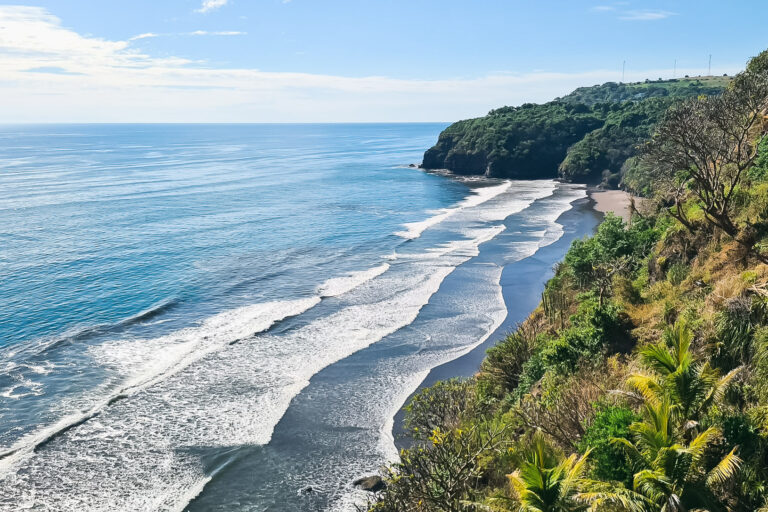
It’s also in a perfect location for activities. Firstly, there’s a pleasant beach beside scenic rocky cliffs and a colorful fishing harbor. Scuba, snorkeling, or surfing can be easily arranged in town. You can reach fantastic mountain hikes (detailed below), natural pools, and several cultural sites within just a 20-minute drive.


Since 2023 the town has received increased investment, including a new seafront promenade. From local conversations during my stay in 2026, I got the sense that the town had been slowly reaching a tipping point — in a good way. More restaurants and cafes had opened in the last few years and Tarrafal had altogether become a very pleasant place. A place that was once perhaps a little dusty and remote now feels ready to receive more visitors.
After some strenuous hiking on Fogo Island, I opted to stay for 5 nights in Tarrafal. I enjoyed the slower pace, often finding myself at the small Kabungo beach bar surrounded by swaying palm trees drinking passion fruit caipirinhas with a good book. But whenever motivation struck it was also very easy to get active and explore.
Getting to Tarrafal: I grabbed a shared minibus, known locally as an aluguer, in Praia. There are two major bus stops for aluguers in the capital; the ones for Tarrafal leave from next to the Várzea Stadium (not from Sucupira Market, unlike what some online sources say). They go all the time (when full) and the cost is 600 CVE. The drive is very scenic, with frequent views of mountain peaks.
Where to stay in Tarrafal: Being in backpacker mode, I opted to stay at Meeting Point Hostel. It’s a classic “travellers’ hostel” built into a residential building with two kitchens, various common spaces, and both dorms and private rooms. The staff here is an excellent source of local information.
There aren’t many hotels in Tarrafal — it’s mostly guesthouses and local apartments. My first suggestion would be the highly-rated Mar Azul Tarrafal, which has views onto the colorful fishing harbor. For something more upscale and refined, the best option I found was King Fisher Village Eco-Boutique Hotel, which is a soulful newly built hotel right on the coast on the western edge of the center.
How to get around: I looked into getting a rental car, but the going rate seemed to be 50 EUR per day, which I found a little steep (but try Graciosa Rent-a-Car if the price is no objection). Luckily Tarrafal is well-connected with minibuses and pick-up trucks that depart from Tarrafal Square or the bus stop outside the market. There are also plenty of taxis if you prefer.
Top things to do in Tarrafal
Relax at Tarrafal beach
Tarrafal has a clean beach in a small bay. Waves are occasionally fierce depending on the tide, but it’s usually a nice and calm place for a swim. Kabungo Beach Bar has some lounge chairs and at the clifftop Farol Tarrafal you can grab some drinks with a view of the beach backed by mountains.

Visit the Concentration Camp Museum
A short drive south of town you’ll find the most significant cultural sight near Tarrafal. A penal colony existed here under the Portuguese dictator Salazar roughly from the 1940s until mid 1970s. If you mention “Tarrafal” to someone in Portugal they’ll likely have this place as their first association.
The “camp of slow death” had been modeled after Fascist Italy and Nazi Germany camps, though it was different in scale and purpose — it was primarily a political prison where around 500 prisoners were held across its decades of operation. The museum tells the story of how it was initially where anti-fascists were imprisoned and later African independence fighters.
It’s now on a UNESCO candidate list. The museum is about a 15 minute walk south of town and entry costs 1 Euro. Information boards are in Portuguese, English, and French.
Explore the Tarrafal town market
The municipal market is a small but vibrant place to take a moment to wander through, having produce but also many colorful fabrics for sale. It also has a food court that’s perfect for some cheap eats while you people-watch. Simple plates and BBQ meals here will cost at most 5 EUR or so.
Visit the market in Assomada
For a much bigger market, you can take the 30-minute or-so aluguer to Assomada on a Wednesday or Saturday. This is the island’s central market where produce but also clothing, furniture, and other goods are sold.
Unfortunately, the main market hall was under renovation when I visited in 2026, spilling the stalls onto several streets around it, and only a smaller fruit market was open. This made it slightly disappointing, though perhaps by the time you read this it’s back to its previous location.
Organized tours that go around the island tend to stop at this market, in which case having a local guide can give you a more immersive experience. A big Kapok tree north of town is another common stop in Assomada.

Swim in the Ribeira da Prata natural pool
About a 20-minute drive south is a small set of natural pools among dark volcanic rocks. These pools fill with seawater and depending on the time of day they can be a little rough with waves or almost perfectly still. Hexagonal basalt columns make for an interesting backdrop while you’ll surely see local kids jumping off the cliffs.
It’s a little difficult to get to, but a fun local spot. Ideally you have your own transportation, or you take an aluguer to the village of Ribeira da Prata and walk from there. Locals warn to be mindful of potential sea urchins deeper into the water.
Hike to the lighthouse
Starting from the cliff above the beach, you can follow a trail all along the rocky coast to the small lighthouse at the end of the bay, which also has a small natural pool nearby. It takes about 1.5 hours there and back; you can see the route here on Alltrails.
The lighthouse isn’t special but the path offers a great way to enjoy the coastal scenery, and it’s the most easily accessed hike from Tarrafal. Ideally you do it as a morning or afternoon hike; I was told it’s best not to stick around the lighthouse when it gets dark, as some muggings have been known to occur there around sunset.


Eat & drink in town
Finally, Tarrafal is a great place to enjoy freshly grilled fish and local Cape Verdean specialties. The following places stood out to me:
- Hola Orla. This ‘shack’ by the beach promenade was where I surprisingly had my best meal — and it was good value too. Get your tuna steak for 700 CVE.
- Mira Mar chez Mama. Homely, family-run place with authentic Cape Verdean food. Plates of the day scribbled on a blackboard; cash-only.
- Restaurant Cegonha. Honestly the food can take a very long time to arrive here (it’s the same with the Restaurante Churrasqueira Mangui Baxu just across the street), though on some nights there is live music here, which can really tilt things in its favour. You may get hungry waiting, but the atmosphere is lovely.
- Restaurant Alto Mira. Possibly the restaurant with the cutest vibe in town, having a lovely patio with outdoor seating. Serves fish dishes, pastas, and pizza.
- Cafe Tropical. My favorite bakery/cafe in town for a nice breakfast or sandwich.
Last but not least, from Tarrafal it’s easy to get to the Malagueta Mountains, a hub for multiple fantastic hikes.
Hiking in Malagueta Mountains
Santiago Island has official hiking trails all over, though the trails in Serra da Malagueta are among the most rewarding and accessible. The park entrance is just a 20-minute or so ride from either Tarrafal or Assomada.
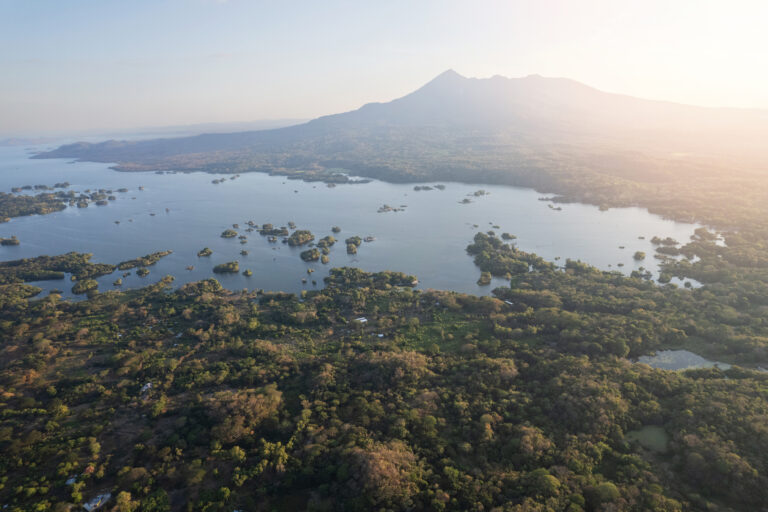
The green valleys and pointy peaks in the Serra da Malagueta reminded me almost of the phenomenal hiking island of Santo Antão — maybe not quite on the same level, but maybe the closest thing in Santiago.
However, the aesthetic will depend heavily on the time of year. I’ve seen some photos of Serra da Malagueta that were utterly dry, brown and murky. I hiked here after several rainy months when the nature was lush and alive.

Before my trip to Santiago I found it difficult to research the available hiking options. Most internet searches will lead you to tour operators who are understandably shy about spilling the specifics. A bewildering number of names are also used for the hikes, including the Principal Valley, Hortelão, GomGom (or Gongon) Valley, Malagueta peak, Monte Soca, Xáxá, and who knows what else. In reality, many of these names refer to the same things.
I did two self-guided hikes in Serra da Malagueta and partially explored a third trail. Based on this I’d say a guide is not a requirement but it can be an enhancer.
The guides will show you the flora and fauna and can introduce you to local spots for lunch or village interactions. If you’re not put off by the 4000 CVE or so fee for an official guide, it will give you a stress-free and more personal experience. You will also benefit from having private transportation back to your accommodation. Most hikers I encountered were accompanied by a guide.
That said, if you are a seasoned hiker you can probably find your way around. There is fairly decent hiking infrastructure in place: at the trailheads is a visitor center with maps and helpful staff (you pay the 200 CVE park fee here). The trails are marked with painted symbols, though they can be unclear sometimes. Having a hiking app like Alltrails or an Openstreetmap-based map app like Organic Maps will help you stay oriented.
Let me break down the options from the perspective of hiking independently, though each of these can also be done as a guided hike.
Here are some of the options for high-rated, local hiking tours. Each offers an extra element of immersion, letting you discover rural life or reach some of the island’s highest peaks.
Hike 1: Into the Principal Valley
This is a wonderful hike combining grand mountain vistas with quaint villages as you descend into a valley. It takes about 4 hours and is nearly all downhill and pretty easy overall. (This hike is often also called the Hortelão hike, though this is confusing since the Gomgom Valley hike also ends in Hortelão.)
From the visitor center, you follow the main road north for a few minutes, until you see a sign pointing to the right and down into the valley. From this mountain rim you can easily see your ultimate objective: a dam with a small artificial lake.
For at least the first hour you’ll find yourself in open terrain, with wide vistas of the pointy peaks and distant ocean. Further down into the valley, you’ll zig-zag through little hamlets with small-scale agriculture, the gardens dotted with banana trees and big old mango trees creating shaded paths.

A few details stood out to me along the way. For instance, at one point I heard a strange rattling noise, as though I had just dropped a container of Tictacs I didn’t know I had. In fact, I had just brushed against one of the many pigeon pea bushes here. When the pods are fully dry they sound like a rattle, which was an odd sensation. The peas (called feijão congo) are used in traditional Cape Verdean cuisine.
Roughly halfway (at these coordinates) you’ll find a small shack where you can grab a drink or simple meal. I ordered a soda drink but was instead enticed to try the owner’s homemade iced papaya juice. The bright orange liquid poured from a reused Coca-Cola bottle was actually the most refreshing drink I could have wished for. I quickly ordered a second.

When you get to the hamlet called Principal, the footpath turns into cobblestoned road. If you find transportation here, you could choose to end your hike here.
Alternatively, you can continue a further 30 minutes or so to Hortelão. Hiking on this road is a bit less engaging than on the footpaths, but the mountain views are still terrific. Hortelão has more transportation options with aluguers (collective minibuses) and pickup trucks stopping here, though it’s a tiny hamlet so you may have to still wait a while. I could soon hop onto a pickup truck directly back to Tarrafal where I was staying.

Hike 2: Mt. Malagueta / Gomgom Valley hike
This hike starts just a little south of the Malagueta park’s visitor center. Instead of diving straight into a valley, this hike first stays level along the mountain rim for about 90 minutes, before winding its way down.
This first part mostly follows a dirt track with signs pointing to ‘Antenas’ — it’s a radio/phone mast station built on the furthest point, which also serves as a viewing point. Staying at an elevation of around 1000m, it’s mostly subtropical pines you’ll see around the path until here.


When I hiked here in 2026, it was not possible to go down from the radio mast into Gomgom valley. I was told landslides had made the path very challenging and it wasn’t clear if any maintenance would be completed in the near future. I gathered the problem had been around for a while. My recommendation is to check with the visitor center at Serra Malagueta and to ask about the currently available paths.
I was told I could only hike to Antenas and go the same way back. On my return, I noticed many guided hiking groups heading further. However, the park staff told me they were going down an alternate path east and not to the Gomgom village
The views around this path are quite spectacular, though the path and overall flora was a little more monotonous than in the valley. Without being able to continue down, it was just an OK hike for me. Had it included Gomgom valley, combining the panoramic views and the kind of detailed valley life I had experienced on the first hike, then it could have well made it my favorite.

Other hiking options
The hiking doesn’t end here — there are many more trails to hit up. With information often a little patchy, I recommend signing up to Alltrails which has good trail descriptions. Alternatively, you can install the app Organic Maps and enable the trails layer, which will show a portion of the available trails.
Earlier I mentioned the lighthouse trail from Tarrafal. It leads into the Monte Graciosa circuit, which circles all the way around the mountain next to Tarrafal, ending back in town. From the Serra Malagueta park entrance, there are also several more hikes beyond the ones I mentioned. I partially hiked the western loop, which offers some amazing views of mountain peaks. It’s particularly beautiful in the morning; while the eastbound hikes are quite bleached with the early sun, the light direction casts a more favorable glow on the western mountains.
Finally, if you are a hiking aficionado, I must also recommend other islands in Cape Verde. My absolute favorite for hikes is Santo Antão and my guide offers a deep dive into the variety of stunning trails there. Closer to Santiago, I can also highly recommend the short boat or plane trip from Praia to Fogo Island, where you can summit the 2829m tall Fogo volcano — an out-of-this-world experience, especially at dawn.