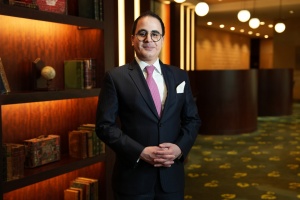
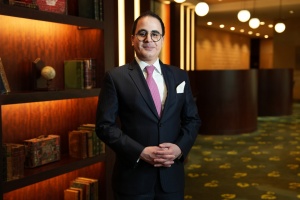
BTN exclusive with Victor Abou-Ghanem, CEO, STORY Hospitality addressing the current mood across the UAE hospitality sector, particularly among hotel owners, operators and investors?
1. How would you describe the current mood across the UAE hospitality sector, particularly among hotel owners, operators and investors?
Owners and operators are managing a period of disruption, particularly around booking visibility and traveller confidence. At the same time, the UAE hospitality sector has been through shocks before and has built a strong operating culture around agility, discipline and recovery. For investors, the focus is less on short-term volatility and more on how quickly demand normalises, how well operators protect cash flow, and whether assets are positioned to capture the rebound.
2. What are the most immediate pressures hotels are facing at the moment – occupancy, forward bookings, staffing, pricing, supply chains or guest confidence?
The most immediate pressure is visibility. Hotels can manage softer demand; what is harder is a booking environment where travel decisions are delayed until the very last minute and international demand becomes less predictable.
Forward bookings, occupancy planning, pricing decisions and workforce deployment all become more complex in this setting. Guest confidence is also critical, because confidence often recovers more gradually than the operational disruption itself.
3. How are booking patterns changing, and are you seeing a clear shift from international demand toward domestic stays, long-stay guests and staycation business?
Periods of uncertainty typically compress booking windows and increase demand for familiar, lower-friction travel choices. Domestic stays, regional travellers, weekend escapes and longer-stay guests can all become more important when international leisure demand softens.
This does not mean international travel completely disappears. It means the market temporarily rebalances toward segments that are easier to convert and more comfortable booking closer to arrival.
4. Are guests cancelling outright, postponing travel, or simply waiting until there is greater clarity before committing?
We are seeing a mix of behaviours across the market. Some guests cancel, some postpone, but many simply wait longer before making a decision. That creates a more last-minute market. Hotels need to be ready, operationally, to convert short-lead demand without overreacting on price or compromising brand value.
5. How important has flexibility become in the current market, whether through cancellation policies, pricing, longer-stay offers or value-added packages?
Flexibility becomes critical during uncertain periods. Guests want reassurance that they can adjust plans if circumstances change. That applies to cancellation terms, date changes, bundled offers and longer stay packages. However, flexibility should not mean indiscriminate discounting. The right approach is to reduce friction for guests while preserving the integrity of the product and the long-term positioning of the hotel.
6. What role can staycations and local “vacation” experiences play in helping UAE hotels maintain momentum during a period of reduced international travel?
Staycations are an important stabiliser. They allow hotels to activate local demand, maintain energy in the property, and create reasons for residents to spend on dining, wellness, family time and short breaks. In the UAE, the staycation market is not simply a fallback segment. It has become a mature part of the hospitality ecosystem. The strongest hotels are those that design these experiences thoughtfully, rather than treating them as distressed inventory.
7. Are work-from-hotel, extended stay, and serviced apartment models becoming more important for operators navigating uncertain demand?
Yes. Models that serve a broader range of stay occasions become more valuable in uncertain periods. Extended stay, serviced apartments and hybrid formats can help smooth demand when short stay transient business becomes less predictable.
This is particularly relevant in markets like the UAE, where business travel, relocation activity and longer project-based stays can complement traditional leisure and corporate demand.
8. Some hotels are using the slowdown to renovate, reposition or temporarily pause operations. Is this a sensible strategy in the current climate?
It can be sensible, but only when supported by asset-specific logic. If a hotel already had planned capital works, a softer trading period may reduce the opportunity cost of renovation.
Repositioning can also be wise where the market has clearly shifted or the product needs to be strengthened. The risk is making reactive decisions without a clear business case. Renovation should be a strategic investment, not a panic response.
9. How should hotel owners decide whether to stay open, reduce capacity, renovate or temporarily close during a period of market contraction?
Owners need to assess four things: expected demand, operating break even, the condition of the asset, and the likely timing of recovery. There is no “one size fits all” answer.
A well-located hotel with diversified demand may remain open and trade through the downturn. Another asset may benefit from reducing capacity or accelerating capex. The correct decision is the one that protects long-term asset value, not simply the one that minimises short term discomfort.
10. What lessons did the hospitality sector learn from previous shocks, including the pandemic, that are useful in the current situation?
The first lesson is that agility matters. Hotels need flexible staffing, diversified market exposure, disciplined cost control, and direct communication with guests.
The second is that recovery begins before the market fully returns. Operators that preserve talent, maintain standards, invest selectively and stay close to their customer base usually recover faster than those that cut too deeply and then struggle to restart.
11. The UAE has long been viewed as a safe, reliable, and highly connected tourism hub. How important is it now to protect and rebuild that confidence?
It is essential for tourism and essential for the UAE. Indeed at the beginning of 2026, Abu Dhabi had been selected by Numbeo’s Safety index by City as the safest city on earth for the 10th consecutive year. The UAE’s strength has always been built on trust: trust in infrastructure, connectivity, safety, service standards and the ability to host the world.
That confidence must be continuously reinforced through clear communication, operational reliability, and a coordinated response across aviation, tourism and hospitality.
12. What more can government, tourism boards, airlines and hotel groups do collectively to reassure travellers and restore demand?
The most important thing is alignment. Travellers need consistent, factual messaging on access, safety, flight availability and booking flexibility. Tourism boards and airlines can help restore confidence quickly when communications are clear and coordinated.
Hotels also have a role. We need to communicate calmly, avoid overpromising, and make the booking journey as reassuring as possible. Confidence comes from coherence across the whole travel ecosystem.
13. Once flights and travel confidence return, do you expect the rebound to be immediate, or more gradual?
Connectivity can recover quickly. Confidence usually rebuilds in stages. We may see some immediate uplift from regional travel, pent-up demand, and rebooked trips. But a full international rebound is more likely to be gradual, especially for longer haul leisure and group segments.
14. Which source markets do you think will return first – regional GCC travellers, European leisure visitors, business travellers, or long-haul international guests?
Regional GCC travellers are likely to be among the earliest to return, followed by short haul leisure and business demand where route recovery is strongest. European leisure could also rebound meaningfully once travellers see stable connectivity and clear messaging.
Long haul markets typically need a little more time, not because the UAE’s appeal changes, but because those trips involve more planning, higher cost, and stronger sensitivity to uncertainty.
15. How should hotels balance tactical discounting with the need to protect brand value and long-term rate integrity?
Discounting should be precise, not emotional. Hotels may need tactical offers to stimulate demand, but broad rate erosion can create long-term damage that is difficult to reverse.
The better approach is to protect headline value where possible and add relevance through packages, flexible terms, F&B credits, wellness benefits or longer stay advantages. Guests appreciate value, but they also notice when a brand loses confidence in itself.
16. Could this crisis accelerate a shift towards more resilient business models, with hotels relying less heavily on one source market or one type of guest?
Yes. One of the clearest lessons is the importance of diversification: by source market, by guest segment, and by revenue stream.
Hotels that rely on one feeder market, one booking channel or one narrow type of guest are more exposed during shocks. More resilient operators build stronger direct channels, stronger local relevance, more balanced demand segments, and richer non-room revenue opportunities.
17. How might the UAE hospitality sector emerge stronger from this period, in terms of product quality, service standards, and market positioning?
It can emerge sharper, more focused and more competitive. Periods of pressure often force better decisions around product quality, operating efficiency, distribution strategy and guest relevance, however it is very difficult to forecast.
If the sector uses this period to protect standards, upgrade assets where needed, and refine its market mix, it can come out stronger rather than simply return to where it was.
18. For STORY Hospitality specifically, how are you adapting your operating strategy across the portfolio?
At STORY Hospitality, we are focused on three priorities: protecting guest confidence, supporting our teams, and making disciplined asset-level decisions with owners.
Operationally, that means staying agile on demand management, preserving service quality, strengthening local and regional relevance, and evaluating opportunities to drive value through longer stays, F&B, wellness and experience-led offers. We have always believed that hotel management requires a balance of strong standards and asset specific flexibility, and that principle becomes even more important in an uncertain market.
19. What message would you give to international travellers, investors and hospitality partners watching the UAE market from abroad?
The UAE remains one of the most capable, connected and resilient tourism markets in the world. The current period is challenging, but it does not alter the country’s long-term fundamentals.
For travellers, the message is that the industry is working hard to provide clarity, flexibility and reassurance, and the country is doing amazingly providing safety for everyone. For investors and partners, the message is that the UAE hospitality sector has repeatedly demonstrated its ability to adapt, recover and continue creating long-term value.