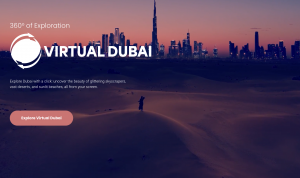
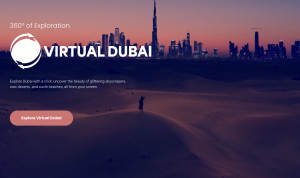
As travel marketing shifts ever more decisively toward creator-led storytelling, Virtual World Internet is positioning itself at the centre of that evolution through Virtual Dubai, its immersive digital platform designed to let audiences explore the city through interactive virtual tours. Virtual Dubai presents itself as “your gateway to the spectacular,” inviting users to discover Dubai through 360° panoramas, fly-overs and immersive tours spanning resorts, spas, beaches, skyscrapers and lifestyle venues. The platform is explicitly framed as being brought to users by Virtual World Internet, whose wider business describes the company as a virtual imaging provider founded in 1995 and focused on interactive solutions for travel and tourism.
That positioning feels especially timely in 2026, when the creator economy has become a core part of how destinations are marketed. CreatorIQ says average reported annual creator-marketing budgets grew 171% year over year, with 71% of organisations increasing investment, while nearly two-thirds of the added spend was reallocated from traditional paid and digital channels. EMARKETER, meanwhile, says marketers are increasingly treating creator marketing as a core strategy, not a side experiment, and forecasts US influencer marketing will grow 14.2% to $9.29 billion. The broader shift is clear: the creator is no longer just amplifying destination campaigns, but shaping how places are framed, discovered and converted into demand.
That is what makes Virtual Dubai more than a simple virtual showcase. Its explore structure maps the city across categories including Hotels & Resorts, Attractions, Shopping, Restaurants & Bars, Beach Clubs, Nightlife, Spas, Ballrooms, Weddings, Conference, Meetings & Events, Villas, Apartments and Presidential Suites. In effect, Virtual World Internet is not merely digitising properties; it is organising Dubai as a category-led creator content ecosystem, one that mirrors the way modern creators, publishers and influencers now think about travel: by niche, mood, aesthetic and audience fit rather than geography alone.
In that sense, Virtual Dubai speaks directly to the needs of the modern creator. A luxury creator does not just need a hotel; they need views, angles, pools, dining rooms and arrival moments. A wellness creator needs spas and serene resort settings. A nightlife creator needs neon, atmosphere and social energy. A business-travel creator needs event venues and high-visibility commercial spaces. Virtual tours, in this context, become not simply booking tools but content infrastructure: a way to pre-scout, storyboard, segment and extend a destination’s visibility long before and long after the physical trip.
The strongest expression of that strategy can be seen in the hotel category, where Virtual Dubai foregrounds the kind of visually powerful properties that dominate high-end travel feeds. Atlantis The Royal is presented as a “beacon of luxury and opulence” on Palm Jumeirah, soaring 43 storeys high with views of the Arabian Sea and Palm Island, private balconies, expansive terraces and private pools. It is the kind of stay built for the creator era: cinematic, architectural and instantly recognisable on screen.
Elsewhere, Ciel Dubai Marina, Vignette Collection by IHG adds a different kind of visual drama. On Virtual Dubai, it is described as the world’s tallest hotel, rising 377 metres with 82 floors, more than 1,000 rooms and suites, skyline and Gulf views, and one of the world’s highest rooftop infinity pools. For the skyline-focused creator, it offers exactly the kind of altitude, scale and spectacle that now drives short-form travel content. Park Hyatt Dubai, by contrast, offers a softer visual language, with its Dubai Creek location, yacht-club setting and more tranquil luxury aesthetic, making it a natural fit for the refined-luxury and slow-travel creator.
What strengthens the proposition further is the way Virtual Dubai connects those hotels to the restaurants, lounges and social venues creators are most likely to feature. At Atlantis The Royal, Virtual Dubai layers the resort experience with a cluster of high-visibility dining concepts. Resonance by Heston Blumenthal is presented as an immersive dining experience built around theatre, experimentation and sensory storytelling, while Dinner by Heston Blumenthal and La Mar add further creator-friendly texture through prestige, design and atmosphere.
The same property also hosts some of the platform’s strongest creator-facing lifestyle venues. Nobu by the Beach is described by Virtual Dubai as Nobu’s debut pool and beach club, complete with private cabanas, signature cocktails, live music and interiors inspired by Japanese architecture and the oceanfront setting. For the lifestyle creator, this is precisely the kind of hybrid space now prized across social platforms: part hospitality, part fashion set, part beach-club theatre. Ling Ling, also at Atlantis The Royal, extends that appeal into the late-night luxury scene, reinforcing the resort’s role as a complete content environment rather than just a place to stay.
Outside Atlantis, other hospitality venues on the platform underline the same logic. ZETA Seventy Seven at Address Beach Resort is presented as a rooftop dining destination perched on the 77th floor, with panoramic views of the Arabian Gulf and Dubai skyline. It is the kind of height-and-horizon setting that has become a proven performer in destination content. In creator terms, these are not simply restaurant listings; they are visual stages.
The beach-club category is equally aligned with creator culture. Summersalt Beach Club at Jumeirah Al Naseem is described as a luxurious beachfront venue with a private beach, infinity pool and views of the Burj Al Arab, giving creators one of Dubai’s most recognisable visual backdrops. Jumeirah Al Naseem itself is presented as a resort with private balconies and terraces overlooking the Arabian Gulf and the Burj Al Arab, reinforcing how Virtual Dubai can connect a hotel stay to the wider visual ecosystem around it.
The nightlife section is even more explicit in its link to creator culture. TikTok Lounge is described on Virtual Dubai as a trendy, social-media-driven spot with neon lights, contemporary décor and multiple Instagrammable areas, making it a favourite among young crowds and influencers. That listing alone captures the larger shift now shaping hospitality: spaces are increasingly designed not just to host guests, but to perform for the creator lens. Virtual World Internet’s tours extend that performance into the digital realm, allowing venues to stay visible, explorable and content-ready at all times.
Virtual Dubai’s relevance extends beyond pure leisure. In attractions and shopping, the platform includes Dubai Mall, described as one of the world’s largest and most visited retail and entertainment destinations with more than 1,200 retail outlets, alongside attractions such as Dubai Aquarium & Underwater Zoo, Dubai Ice Rink and VR Park. It also features Terra – The Sustainability Pavilion at Expo City Dubai, adding a design-led, innovation-focused dimension that broadens the platform beyond glamour and nightlife into architecture, culture and purpose-led storytelling. For the modern creator, that matters: today’s destination narratives increasingly mix luxury with values, design, technology and experience depth.
The meetings and events side is just as important. Dubai World Trade Centre is presented as a premier exhibition and events venue in the heart of Dubai’s business district, hosting international conferences, trade shows and exhibitions. This matters because the 2026 creator economy is no longer confined to leisure travel. Creators are now embedded in trade events, launches, activations and B2B storytelling, making venues themselves part of the content economy. Virtual World Internet’s approach therefore supports not only destination discovery but also the wider overlap between creator culture, live events and commercial storytelling.
There is also a strategic advantage in how Virtual World Internet has built Virtual Dubai around categories rather than isolated flagship assets. A luxury creator can move from Atlantis The Royal to Nobu by the Beach and Ling Ling. A beach-club creator can pair Summersalt with Jumeirah Al Naseem. A skyline creator can focus on Ciel Dubai Marina and ZETA Seventy Seven. A retail-and-attractions creator can shape content around Dubai Mall and Terra. In each case, the platform becomes less a website and more a ready-made editorial map for content creation.
More broadly, Virtual World Internet’s timing looks smart. At a moment when creators are central to visibility, credibility and conversion, brands and destinations need assets that are immersive enough for editorial, flexible enough for social, and structured enough for commercial use. Virtual Dubai suggests that virtual tours are no longer a supporting add-on to travel marketing. In the creator era, they are becoming a foundational content layer, helping hotels, restaurants, attractions and event venues remain explorable, bookable and story-ready across the full travel funnel.
For Virtual World Internet, that creates a compelling position: not simply as a provider of virtual tours, but as a company building digital infrastructure for the next phase of destination storytelling. In a market where the creator now sits at the heart of travel discovery, Virtual Dubai makes a persuasive case that the future of tourism content will not just be photographed or filmed. It will be navigated.
Visit www.virtualdubai.com