Peru is one of the most thrilling destinations in Latin America – and a personal favorite of mine. If you have at least 2 weeks in Peru, you can plan an epic, action-packed trip to this Andean nation. Here’s exactly how.
From the lush Amazon rainforest to the dry deserts of the coast, from the high Andean mountains to the picturesque colonial cities, Peru seriously ticks every box.
It’s also one of the easiest countries to travel around in terms of logistics and budget. You’ll often be surrounded by others with their backpacks on, ready to explore. So you can relax your shoulders and breathe; you’re about to go on the adventure of a lifetime!
How to spend 2 or 3 weeks in Peru
Peru is huge, and if you’re taking buses to get around, you can expect some 12+ hour rides. That means you should choose your destinations carefully, especially if you spend only two weeks in the country.
3 weeks is a more comfortable trip length as it will let you see Peru at a more relaxed pace, or have more stops along the way. So, if you can stretch your trip to 3 weeks, I do recommend it. If so, you can follow this 2-week itinerary, but include more of the options I’ve listed at the end.
Here, I’ve laid out a classic journey for exploring Peru, but that doesn’t mean you have to do it exactly like this. If you want to save Machu Picchu for the last week, then by all means, or if you want to skip the jungle and spend more time in the mountains, that’s up to you. I don’t believe in the ‘perfect’ itinerary as it depends on the individual traveller, so think of this as a template!

Week 1: Cusco + Machu Picchu
Machu Picchu – the mother of all wonders. It’s no surprise that it is one of the most iconic destinations in South America.
The wonder of the world is at the top of everyone’s bucket list, and once you lay eyes on it and wander through the ancient ruins, you’ll understand why.
Even though the ancient site is getting busier every year, forcing new timeslot-based ticketing to be introduced, you really can’t go to Peru and not see Machu Picchu – it feels like that should be illegal.
So, in our first week, we are setting off to Cusco, the heart of the Inca Empire and the gateway to Machu Picchu.
| Iitnerary | Where to stay | What to do |
| Days 1 & 2: Welcome to Cusco | Casa Encuentro San Blas, a homey San Blas guesthouse, steps from the neighborhood’s artisan lanes and cafés | Book a tour to Cusco’s Rainbow Mountain & Red Valley, two of Peru’s most spectacular natural wonders |
| Days 3 to 7: The route to Machu Picchu | Option 1: Camping (included in the tour)
Option 2: Stay at 1911 hotel in Aguas Calientes, perfectly set up for early Machu Picchu departures |
Option 1: Book your Inca Trail Trek to Machu Picchu
Option 2: If trekking is not your thing, you can stay longer in Cusco, then take a train to Aguas Calientes and visit Machu Picchu |
Days 1 & 2 – Cusco
Located in the southeast of Peru, Cusco is a perfect mix of colonial charm and Inca culture. The streets are covered in cobblestones, you can stroll through colorful markets, and ancient ruins will transport you back in time.
Even though it’s the most touristy city in Peru, it’s just about everyone’s favorite. There are loads of back streets to get lost in, cute cafes, and some of the best food in Peru. For some original ideas, check out our Cusco travel guide.

You can’t quite hit the ground running as soon as you arrive in Cusco. The city sits at 3,400 meters (11,200 feet) above sea level, so you’ll need to take it easy for your first couple of days in Cusco to acclimatize to the altitude! Here’s how to do it right:
- Drink plenty of water and coca tea, and try to avoid alcohol and heavy meals
- If you’re really struggling, you can buy some altitude sickness pills
- The locals will tell you to chew on coca leaves, which, they say, helps with altitude sickness. I’m not sure if that’s been proven, but you can give it a try and see if it works for you
With only two weeks, you don’t have days to waste, so I recommend acclimatizing for at least a day. Don’t worry, you can spend the day exploring the Plaza de Armas, the main square in Cusco, visiting the San Pedro Market, or eating some delicious Peruvian food.
Where to stay in Cusco
The city’s greatest accommodation advantage is its strategic location as the gateway to Machu Picchu, while being a fascinating destination in its own right.
Many hotels in Cusco are housed in beautifully restored colonial mansions or ancient Inca structures, with original stonework still standing strong. Staying here feels like sleeping inside a living museum.
Editor’s note: if you’re tempted to look beyond the city limits, there are a few stays that feel like they belong in another accommodation category entirely – like the Vertical Sky Suites. They’re glass capsules clinging to a sheer cliff face, 2,000 feet above the Sacred Valley floor, opening onto uninterrupted 360° views of the Andes. It’s quite far outside Cusco, though a stay here includes a free pick-up in the city.

- Viajero Cusco Hostel (starts from $19) – a lively backpacker hostel in the historic center with a buzzing social bar and a communal vibe
- Casa Encuentro San Blas (starts from $44 ) – a homey San Blas guesthouse with sweeping wrap-around views over Cusco, steps from the neighborhood’s artisan lanes and cafés
- Wyndham Costa del Sol Cusco (starts at $132) – a 17th-century colonial mansion right in Cusco’s historic center, just a short walk from Plaza de Armas, with a classic courtyard feel inside a modern 4-star hotel
- Antigua Casona San Blas (starts at $316) – a restored colonial-era boutique hotel in Cusco’s San Blas district, offering boutique-style rooms around a cozy courtyard – ideal for couples and solo travelers
How to get to Cusco
Flying: If Cusco and Machu Picchu are your first stops on your Peruvian adventure, then you can take a flight to the Alejandro Velasco Astete International Airport. You might have a layover in Lima, but this is the easiest way to make the most of your time. The short flight from Lima to Cusco takes about an hour and is the quickest way to get there.
Overland: If you’re already in Peru and coming from another city, then you can get to Cusco by bus or plane. You’ll find buses to Cusco from pretty much anywhere in Peru, and they’re usually way cheaper than a flight. But beware, some of these bus journeys can take up to 24 hours, so make sure you’re prepared for a long ride.
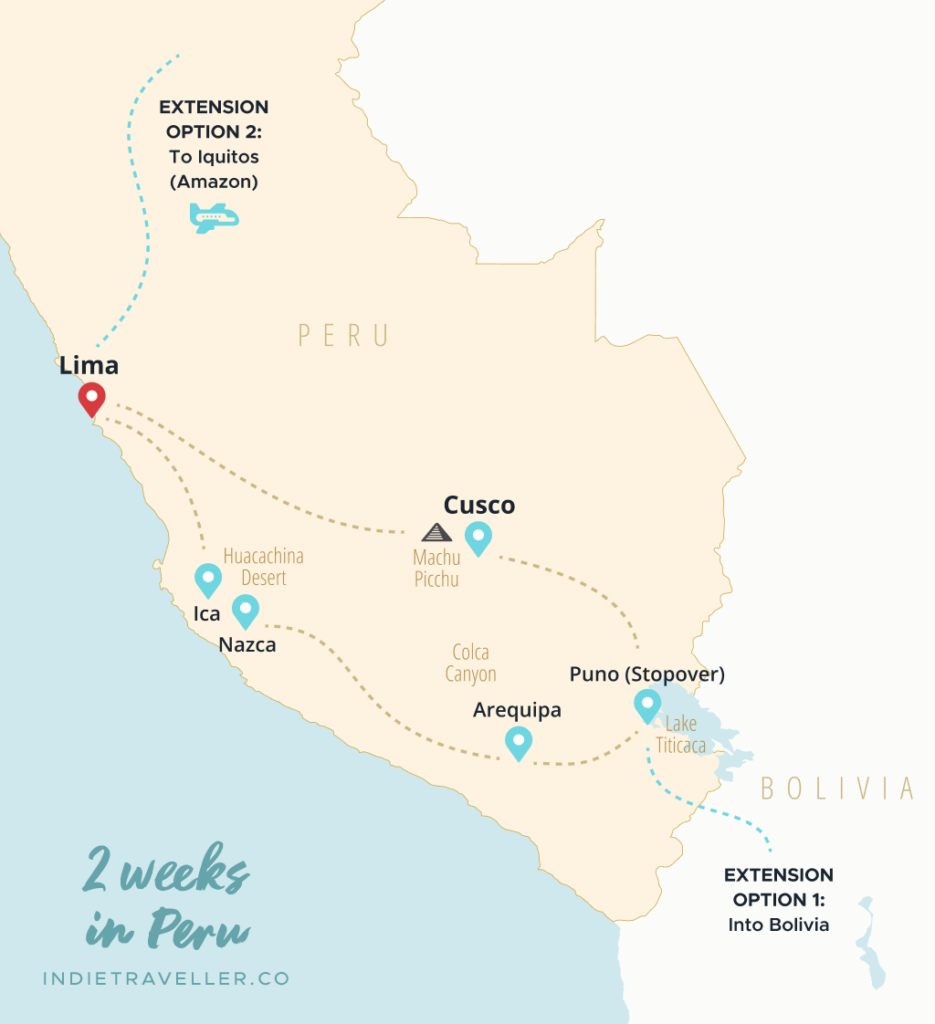
A lot of backpackers will be on the Gringo Trail, which in Peru consists of starting in Lima, bussing to Huacachina for sandboarding, then on to Arequipa, Colca Canyon, and finally Cusco. This is an amazing route in Peru and one I highly recommend. You can also do it backward by starting in Cusco, but taking the night bus from Arequipa is one of the most popular ways to get to Cusco.
Exploring Cusco & beyond
Cusco is the perfect home base for exploring the surrounding areas. Some of my favorite day trips from Cusco include the Sacred Valley, Maras and Moray, and Rainbow Mountain.
There are plenty of tour options available in Cusco for these destinations. For example, you can take this day trip from Cusco that includes guided tours of the Rainbow Mountain and Red Valley.
The Sacred Valley is home to many Incan ruins, including the famous Machu Picchu. You can also visit Pisac Market, where you can find local handicrafts and souvenirs. Maras and Moray are known for their unique salt mines and agricultural terraces.
And, of course, Rainbow Mountain has become one of Peru’s most famous attractions with its vibrant colors and challenging hike.
Days 3 & 7 – Machu Picchu
After getting acclimatized to the high altitude in Cusco, it’s time to make your way to Machu Picchu. It’s mindblowing to experience it in person and imagine the incredible engineering and architecture of the Incan Empire. Not only that, but the views are out of this world.


Trekking to Machu Picchu (the adventure route)
Now, onto the fun stuff. If you’re looking for an adventure and some amazing views, hiking to Machu Picchu is the way to go. There are two iconic ways to hike your way to Machu Picchu: the Inca Trail and the Salkantay Trek.
The Inca Trail is a classic bucket-list adventure. It’s historic, UNESCO-recognized, but only accessible through a licensed tour. The Salkantay is for the spontaneous and the bold: higher altitude, bigger scenery, fewer crowds, and no permit required. So just lace up and go.
Comparison chart: which is better, the Inca Trail or the Salkantay trek?
- Duration: 4D / 3N
- Difficulty: moderate
- Max altitude: 4,200m
- Distance: ~43 km
- Permit required: Yes & sells out fast
- Itinerary:
Day 1: KM 82 (Piscacucho) → Huayllabamba
Day 2 (hardest day): Huayllabamba → Pacaymayo (via Dead Woman’s Pass)
Day 3: Pacaymayo → Wiñay Wayna
Day 4: Wiñay Wayna → Machu Picchu (via the Sun Gate at sunrise) - Best for: trekkers and bucket-listers wanting the classic, iconic route
- Duration: 5D / 4N
- Difficulty: hard
- Max altitude: 4,637m
- Distance: ~74 km
- Permit required: entry ticket only
- Itinerary:
Day 1: Cusco → Challacancha → Soraypampa (+ Humantay Lake side trip)
Day 2 (hardest day) Soraypampa → Salkantay Pass → Challway
Day 3: Challway → La Playa / Collpapampa (cloud forest & waterfalls)
Day 4: La Playa → Llactapata → Aguas Calientes
Day 5: Aguas Calientes → Machu Picchu - Best for: independent travelers/backpackers
There’s more to plan than just picking a trail. Read our Machu Picchu travel guide, which covers every route in detail, how to secure permits before they’re gone, and the tour operators worth trusting.
Trek 1: the CLASSIC Inca Trail
The Inca Trail is the most popular hiking route to Machu Picchu. It’s a 4-day trek through the Andes Mountains, passing ancient Incan ruins and beautiful landscapes. The trail is relatively easy, but it does require some physical fitness as there are steep sections and high altitudes.

It’s a total of 26 miles (43 kilometers), and you’ll be camping along the way. If you don’t happen to have your own gear, don’t worry, as this is extremely common for travelers. The tour companies will provide you with everything you need. To help preserve this ancient route, only 500 people are allowed on the trail each day, and all must travel with official permits.
Because a licensed tour operator is required, we recommend going with Alpaca Expeditions – one of Peru’s most trusted (and our editor’s favorite). Their guides really know the trail, the chefs cook proper meals even at altitude, and the porters keep the group moving. Groups cap at 14, with permits, food, and gear all taken care of.
Trek 2: Salkantay Trek
The Salkantay Trek is a more challenging route, but it also offers incredible views of the Andes Mountains and glaciers. This trek takes 5 days and covers a total distance of 46 miles (74 kilometers). It’s a bit less crowded than the Inca Trail, making it a great option for those looking for a more secluded experience.
There are several options for more comfortable stays along the way, such as mountain lodges or basic guesthouses, but camping is still common for certain portions of the trek. However, the Salkantay Trek does require a higher level of physical fitness as you will be hiking at high altitudes and through rough terrain.
Unlike the Inca Trail, no permit is required to do this trek, so it’s genuinely more flexible and open to anyone ready to go. This 5-day Salkantay group trek takes half the burden off, with mules carrying your gear, transport handled, and a proper camp setup.


Trek 3: the wild Inca Jungle Trek
If you’re like me and you’re looking for more adrenaline and less hiking, then the Inca Jungle Trek might be the perfect option for you. This multi-day group trek includes activities such as mountain biking, rafting, and ziplining before reaching Machu Picchu. It takes 4 days and covers a total distance of 43 miles (69 kilometers).
This trek is ideal for adventure seekers who want to combine outdoor activities with the cultural experience of visiting Machu Picchu. It also offers a more budget-friendly option than the Inca Trail and Salkantay Trek.
Be sure to have your tickets for Machu Picchu! You need an entrance ticket in advance, which you can get through the Peruvian Ministry of Culture’s website. (Walk-up tickets are available in Aguas Calientes but sell out quickly) If you’re hiking the Inca Trail, you’ll need a separate permit via a licensed tour operator. Most tours bundle the entrance ticket, but confirm this beforehand.
Once your tickets are secured, you can plan your two weeks in Peru a little better and know exactly which day you’ll be at Machu Picchu.
After Covid-19, Machu Picchu began dividing the site into different circuits: 1, 2, 3, and 4. These routes are one-way only and cannot be modified once you begin. So if you want the classic Machu Picchu picture from the viewpoint, you need to make sure your ticket includes circuits 1 or 2. More on this in our Machu Picchu guide.
Take the train to Machu Picchu (quickest way)
The quickest and easiest way to get to Machu Picchu is by train. You can choose to take the luxurious Hiram Bingham train or opt for a more affordable option like PeruRail or IncaRail. The train takes you to Aguas Calientes, the town at the base of Machu Picchu, where you can either hike up or take a short bus to the entrance.
You’ll catch the bus on the main road, and tickets can be purchased at the bus station or online in advance.


I recommend taking the train from Cusco the day before your entry ticket. This way, you can get a good night’s rest in Aguas Calientes and be ready to explore Machu Picchu bright and early.
After spending a few hours on the Incan site, you can take one of the later trains back to Cusco or Ollantaytambo. This will help you save time if you’re trying to see a lot in two weeks.
Hop on a bus (cheapest way)
The most affordable way to get to Machu Picchu is by taking a local bus. You can catch a bus from Cusco to Ollantaytambo and then another one from Ollantaytambo to Hidroelectrica, the closest point accessible by road. From Hidroelectrica, you’ll need to hike about three hours along the train tracks until you reach Aguas Calientes.
A more convenient way is to use a tourist shuttle that goes direct from Cusco to Machu Picchu. Several reliable companies offer bus rides. Machu Picchu By Bus, for example, specializes in tourist-friendly service with multiple departure times to fit your schedule and operates modern buses (a real plus on these winding mountain roads). SAP Adventures is another option, offering flexible bookings.
Most platforms accept major credit cards and will send confirmation directly to your email – just remember to download or print your ticket before heading to the departure point, especially since cell service can be spotty in the more remote areas approaching Hidroelectrica.
Week 2 in Peru
Your second week in Peru is seriously full of options. From exploring more of Cusco to heading down south towards Puno and Lake Titicaca or flying up north to the incredible city of Lima, there’s no shortage of things to do.
I don’t believe there is ever a universal ‘perfect’ itinerary, as everyone has different interests, so for this second section, I’ll be presenting several options.
Option 1: Arequipa, Huacachina, and Lima
The most popular destinations to visit before or after Cusco are Arequipa, Huacachina, and Lima. Especially if you’re still on a hiking buzz!
Days 8 & 10 – Arequipa
You can hop on a night bus to Arequipa from Cusco. It takes about 12 hours, but it’s highly worth it.
Arequipa is known for its beautiful colonial architecture and the nearby Colca Canyon, which is deeper than the Grand Canyon. If you want the full scoop, check out our Arequipa travel guide.
You can do a two-day trek at Colca Canyon, making your way down to the bottom of the canyon and camping overnight. If you’re short on time, you can do a day trip to see the condors.

A restored 18th-century colonial mansion with original sillar stone features and volcano views.
A boutique hotel in a republican-era building with a rooftop terrace overlooking Misti volcano.
Cosy homestay in a traditional wooden house inside the park
Days 11 & 12 – Huacachina
Snag another night bus and head to the famous desert oasis, Huacachina. This small town is built around a natural lagoon surrounded by massive sand dunes. Squint your eyes and you might think you’re in the Sahara.
Spend the day enjoying the sun at these lower altitudes, then take a dune buggy ride and go sandboarding down the dunes at sunset. (It’s wild! I had no idea it would feel like a roller coaster through the desert.)
Days 13 & 14 – Lima
Finally, make your way to Lima for your last two days in Peru. This bustling city is known for its incredible food scene and vibrant nightlife.
I should mention that Cusco and Arequipa are much more picturesque cities, and not everyone is impressed with Lima if it’s their first sight of Peru. However, I promise the capital is well worth exploring if you set your expectations appropriately. If you need any convincing, read our take on whether Lima is worth visiting.
Just a heads up, Lima can be pretty dodgy if you stumble into the wrong areas. And it’s not called “la Gris” for nothing (meaning gray). The skies are just about always overcast, and it’s pretty ugly with some hefty traffic.

If you wish to avoid the traffic noise and chaos of the center, then Miraflores and Barranco (by the coast) offer more relaxed locations to stay. They’re safe, and you’ll be able to walk in most places.
Some people love Lima, some people hate it. But there’s one thing Lima definitely has in spades: amazing food! Make sure to try some of Peru’s famous dishes like ceviche, lomo saltado, and aji de gallina. Peru seriously has one of the best cuisines. Oh, and don’t forget to wash it all down with a Pisco Sour, the national drink of Peru.
A hotel right in the heart of Miraflores with spacious rooms and reliable comfort – ideal for short stays or travellers who want a central base
An artistic guesthouse in oceanfront Barranco, set in a restored mansion filled with artwork and surrounded by gardens with sea views.
A historic 5-star hotel in San Isidro, featuring elegant rooms in a 1920s colonial building, with pool access and adjacent to the Lima Golf Club.
Option 2: Iquitos and the Amazon
If you’re looking to see a completely different side of Peru, head up north to Iquitos and venture into the Amazon rainforest.
You can take a short flight from Cusco to Iquitos and then hop on a boat to cruise along the river and experience the unique wildlife and culture of the Amazon.
Days 8 & 9 – Iquitos
Iquitos is the largest city in the world that can’t be reached by road, so regardless of which city you’re coming from, you’ll have to fly in.
As soon as you arrive, you’ll instantly be hit by the hot and humid climate of the jungle. Spend your first day exploring the city and visiting the huge Belen market. Be prepared for a complete culture shock coming from the mountains. You’ll see huge meat markets with carcasses hanging in the open air and piles of exotic fruits and vegetables.
Days 10 & 13 – Amazon River
The next few days will be spent in the Amazon rainforest. There are loads of different tours and experiences. I highly recommend doing 3 nights/4 days. It takes 3-4 hours by boat to get to the lodge from Iquitos, and you’ll be fully surrounded by nature. Wake up to the sound of howler monkeys, go on a sunrise canoe ride, and explore the jungle with expert guides.
The days will be filled with jungle walks, piranha fishing, caiman spotting at night, and visiting local communities to learn about their way of life in the rainforest. And if you’re feeling really brave, you can meet a shaman and try traditional plant medicine ceremonies.

Don’t forget to bring a book—Wi-Fi is a no-go in the Amazon!
Once you’ve soaked in the wild beauty of the rainforest, make your way back to Iquitos and catch a flight to Lima for one final adventure-packed day in Peru!
Day 14 – Lima
If you’re a surfer, you can catch the longest left-handed wave in the world at Chicama. Otherwise, spend your day exploring the historic center of Lima, and make sure to eat all the ceviche you can before heading home.
Option 3: Lake Titicaca and Bolivia
When you’re in Cusco, you’re actually rather close to Bolivia, so why not take a detour and explore the beautiful Lake Titicaca and check off a new country?
This will be a fast-paced week with a lot of travel, but once you reach Puno, everything is much closer than the 12-hour-night buses Peru offers.
Days 8 & 9 – Puno
Take a bus from Cusco to Puno, the gateway city to Lake Titicaca. Spend a day exploring the city and its markets, and make sure to try some local delicacies like alpaca meat.

Take a boat trip to the famous Uros floating islands. These man-made islands are made entirely of reeds and have been home to indigenous communities for centuries.
You’ll learn about their way of life and spend time with the locals before heading back to Puno for the night.
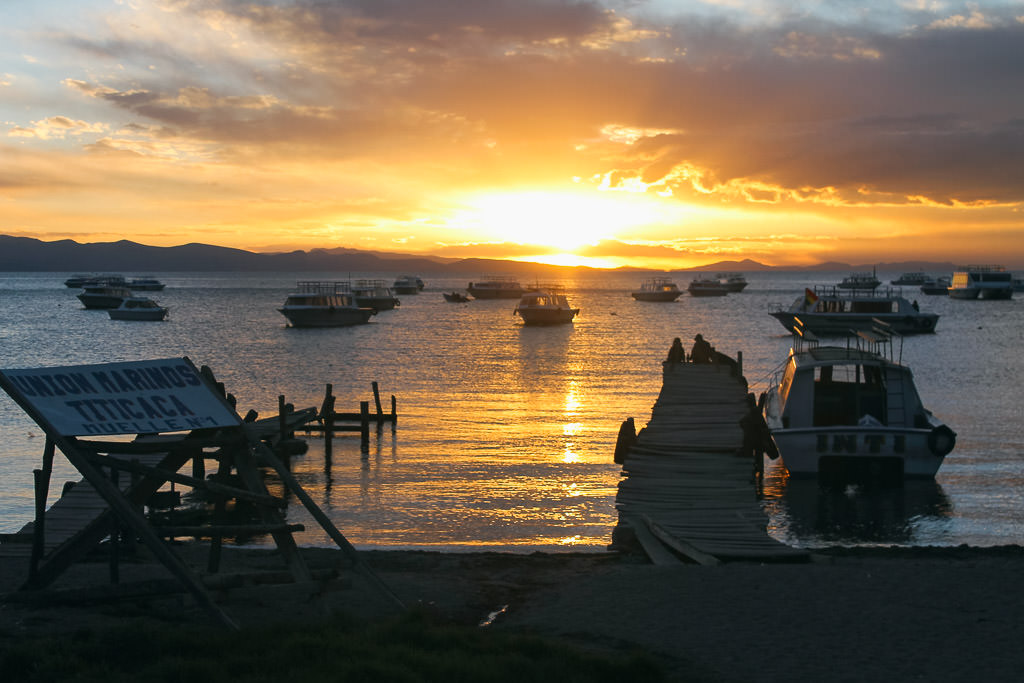
Days 10 & 11 – Copacabana
Cross the border into Bolivia and make your way to Copacabana, a charming town on the shores of Lake Titicaca. Take a tour of Isla del Sol, the legendary birthplace of the Inca Empire. You can also hike to the top of Cerro Calvario for stunning views of the lake and surrounding mountains.
Day 12 – La Paz
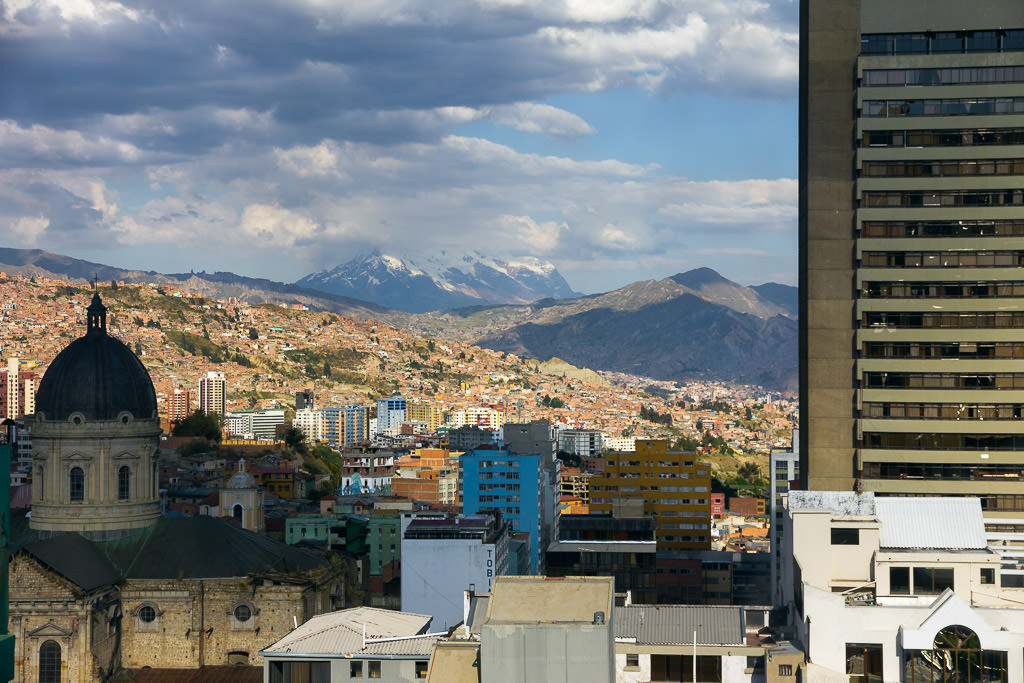
Take a bus to La Paz, Bolivia’s capital city. Spend your day exploring the colorful markets and vibrant street art.
You can take a cable car ride to El Alto for breathtaking views of the city and the surrounding Andes mountains. The city doesn’t have many must-see attractions, but just walking around and immersing yourself in the culture is an experience in itself.
Days 13 & 14 – Salar de Uyuni
No trip to Bolivia is complete without a visit to the otherworldly Salar de Uyuni, the largest salt flat in the world. Take a guided tour of the vast expanse of white salt, towering cacti, and colorful lagoons filled with flamingos. Your guide will have all the fun little props for you to take some amazing photos on the salt flat.
With two weeks in Peru you have so many options for experiencing all the South American gem has to offer. You just have to decide what your budget is and what experiences matter most to you.
Whether you want to trek through the Andes, explore ancient ruins, or immerse yourself in local culture, Peru has something for everyone. Of course, you can always go back – and trust me, after you taste the ceviche and a pisco sour, you’ll definitely want to!