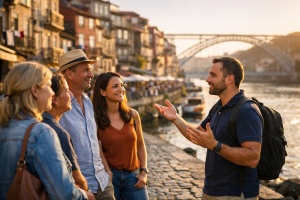
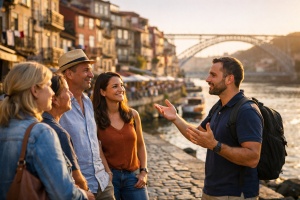
The Shift from Traditional Tourism to Local Experiences
Over the past decade, the travel industry has undergone a profound transformation. Today’s travellers are no longer satisfied with ticking off landmarks from a checklist — they seek authentic, immersive experiences that allow them to connect with destinations on a deeper level.
This shift has given rise to what is now widely known as experiential tourism, a growing segment that prioritises culture, storytelling, and local interaction over traditional sightseeing.
Across Europe, this trend is reshaping how destinations are explored — and few cities embody this evolution as naturally as Porto.
Why Walking Tours Are Becoming the Preferred Choice
Among the many formats of experiential travel, walking tours have emerged as one of the most effective and scalable solutions for both travellers and operators.
From an industry perspective, walking tours offer:
● Low environmental impact, aligning with sustainability goals
● High engagement, through direct interaction with local guides
● Flexibility, allowing personalised and small-group experiences
● Deeper storytelling, transforming visits into memorable journeys
For travellers searching online for terms like porto walking tour, porto experiences, or things to do in Porto, the demand is increasingly shifting towards curated, meaningful activities rather than generic tours.
Porto: A City Designed for Authentic Exploration
Porto presents a unique advantage in this new tourism landscape. Its compact layout, rich history, and strong cultural identity make it an ideal destination for exploration on foot.
Unlike larger, more saturated cities, Porto offers:
● A human-scale historic centre, perfect for walking
● A blend of UNESCO heritage and local life
● Authentic neighbourhoods where traditions remain intact
● A strong connection between gastronomy, history, and daily culture
These characteristics position Porto as one of the most compelling destinations in Europe for experiential tourism — particularly for travellers seeking genuine cultural immersion.
Local Operators Driving the Experience Economy
As the demand for authenticity grows, local operators are playing a crucial role in redefining the tourism experience.
In Porto, a new generation of tour providers is moving beyond standard routes and scripted narratives. Instead, they focus on:
● Story-driven experiences
● Cultural and historical depth
● Personalised interaction
● Local insights that cannot be found in guidebooks
Companies like Bluedragon Porto City Tours exemplify this shift. By offering immersive walking experiences rooted in local knowledge, they transform a simple city visit into a meaningful journey.
Rather than simply showing landmarks, these experiences help visitors understand the identity, heritage, and rhythm of Porto, creating lasting emotional connections with the destination.
The Business Impact: Higher Value, Better Engagement
From a business perspective, experiential walking tours are proving to be highly valuable.
Key advantages include:
● Higher customer satisfaction and retention
● Stronger word-of-mouth and online reviews
● Increased conversion rates for experience-based bookings
● Enhanced destination branding and differentiation
For travel companies and destinations alike, investing in high-quality walking experiences is no longer optional — it is becoming a strategic necessity.
What This Means for the Future of Travel in Europe
Looking ahead, the growth of experiential tourism shows no signs of slowing down.
Travellers are increasingly searching for:
● Authentic cultural encounters
● Sustainable ways to explore cities
● Personalised and meaningful itineraries
Cities like Porto are well-positioned to lead this movement, offering the perfect combination of scale, authenticity, and cultural richness.
As demand continues to evolve, walking tours will play an even more central role in shaping the future of urban tourism — not just as an activity, but as a gateway to understanding a destination.
Conclusion
The rise of experiential walking tours reflects a broader transformation within the global travel industry. It signals a move away from passive tourism towards active, meaningful exploration.
Porto stands at the forefront of this shift, demonstrating how smaller cities can deliver richer, more authentic travel experiences.
For travellers searching for the best things to do in Porto, the answer increasingly lies not in monuments alone, but in the stories, people, and moments that bring the city to life — one step at a time.