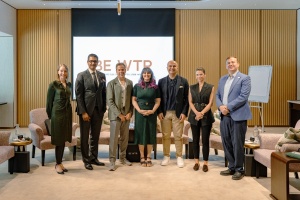
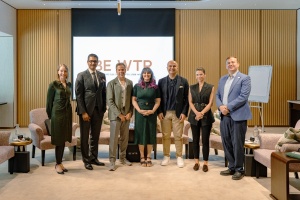
To mark World Earth Day, BE WTR convened a Sustainability Roundtable at W Hotel Mina Seyahi Beach Resort & Marina, which welcomed some of the UAE’s most influential voices across hospitality, sustainability, media, and local community initiatives. With ESG practices a hot topic right now, the event shone a spotlight on homegrown brands and changemakers who are actively shaping a more responsible, circular, and environmentally conscious future in the region.
Held on April 22nd, internationally recognised as World Earth Day, the roundtable discussion put an emphasis on how local luxury brands across the UAE, particularly within hospitality, are already implementing meaningful sustainability practices. It explored translating these efforts into more consumer-facing decisions, encouraging individuals to make more informed and responsible choices in their everyday consumption. The importance of stronger governmental support and policy frameworks to accelerate progress towards net zero were discussed, alongside the need for clearer communication between brands and consumers. The conversation also addressed the key challenges faced by sustainability-driven businesses, including balancing financial viability with environmental responsibility and effectively communicating their impact to increasingly conscious audiences.
BE WTR’s roundtable was designed to celebrate and elevate local brands that prioritise sustainability through organic sourcing, waste reduction, and community empowerment. Hosted at W Hotel Mina Seyahi, the session created an open platform for discussion, collaboration, and knowledge sharing, reinforcing the importance of ongoing dialogue in driving long-term behavioural change and industry-wide transformation.
The roundtable was moderated by Rachel Redfern, Editor-in-Chief of The Carbon Current, and featured a diverse panel of experts, including Mike Hecker, Founder and CEO of BE WTR; Amit Nayak, Vice President at HAMA MEA; Amanda Grögor, environmental advocate; Omar Shihab, Founder and Chief Sustainability Officer of BOCA and Jennifer Sault, Founder and Managing Director of Thrift for Good. Together, they offered unique perspectives spanning marine conservation, sustainable fashion, hospitality operations, ESG reporting, and circular business models.
The evolving definition of “homegrown sustainability” in the UAE was explored, with a strong emphasis on localisation and resilience. Speakers highlighted how sourcing products locally reduces environmental impact while also strengthening supply chains and supporting national development. The importance of transparency also emerged as a central theme, with clear ESG reporting and open communication identified as key to building trust and driving informed consumer choices.
Panellists also addressed the commercial realities of sustainability, noting that long-term success depends on balancing environmental responsibility with financial viability. Conversations touched on the growing role of technology in measuring waste and improving efficiency, as well as the increasing influence of social media in challenging greenwashing and raising awareness. With such diverse talking points as circular practices in hospitality, such as reducing food waste and reusing materials, to broader policy recommendations including incentives and regulation, the discussion highlighted how sustainability is an ongoing journey requiring collaboration, data, and accountability.
Mike Hecker, Founder and CEO of BE WTR, commented, “We strongly believe in strengthening local water systems by producing premium water at the point of consumption. Using advanced filtration and bottling technology, we can create high-quality water from local sources while significantly reducing the environmental impact associated with importing it. As climate change continues to affect water sources globally, consumers are becoming more aware and are demanding safer, more sustainable options, which is why building resilient, local ecosystems is key to the future of responsible consumption.”
He also stated how “BE WTR is built on a circular model, where our bottles are reused up to 300 times, making it a far more sustainable alternative to single-use formats. In the UAE, we are proud to offer a locally produced, premium and ultra-filtered water solution that combines quality, transparency, and responsibility in every bottle we serve.”
Amit Nayak, Vice President at HAMA MEA, added, “The real challenge is not the lack of solutions, but building the right mindset, education, and alignment across the industry. Sustainability cannot be treated as a side initiative; it has to be embedded in daily operations, decision-making, and investment thinking, while also making commercial sense. When every stakeholder understands their role, sustainability becomes part of the culture, not something done occasionally, but simply the way we create long-term value in hospitality.”
Omar Shihab, Founder and Chief Sustainability Officer of BOCA, mentioned that, “Sustainability requires a shift in mindset across the entire value chain, starting with a clearer understanding of where products come from, how they are grown, and how they are used at every stage. In hospitality, guests still prioritise quality and experience, so the responsibility sits with restaurants to ensure sustainability enhances, rather than compromises, what is on the plate. That means embracing local sourcing, improving how ingredients are utilised, and thinking more circularly.”
He continued, “At the same time, you cannot change what you cannot measure, so data plays a critical role in identifying inefficiencies and driving meaningful progress. It is an ongoing journey, but through greater ownership, community collaboration, and small, thoughtful nudges that build awareness, the industry can begin to shift behaviours in a more impactful and lasting way.”
Amanda Grögor, environmental advocate, said, “With the recent mangrove planting and coral restoration projects, alongside stronger ESG commitments across industries, we’re seeing real momentum in the UAE, which is incredibly encouraging. Social media is also playing a powerful role in driving transparency and challenging greenwashing, creating a new level of awareness that is already influencing how people think and consume. Looking ahead, responsibility must sit with producers as much as consumers, and through clearer communication, stronger policy measures, and more circular approaches like second-hand consumption, we can begin to shift behaviours in a more meaningful way.”
“One of the most impactful steps we could explore is the introduction of a plastic tax for fashion brands, which would help shift both industry behaviour and consumer mindset. By making the environmental cost of production more visible, it encourages brands to take greater responsibility for their materials and production processes, while also prompting consumers to think more consciously about keeping items longer, repairing them, or choosing second-hand first,” Amanda concluded.
Jennifer Sault, Founder and Managing Director of Thrift for Good, commented, “We need to position sustainability as the first and most desirable choice, showing that it can sit at the premium end of the market without compromise. At Thrift for Good, our focus is on ensuring clothing never reaches landfill, proving that small, everyday decisions can contribute to much larger, more effective systems. With exciting innovations continuing to emerge, there is a real opportunity to reshape consumer behaviour and create a more circular, impactful future.”
Following the discussion, guests had the opportunity to experience BE WTR’s operations first-hand through a guided tour of the bottling plant. The visit offered a behind-the-scenes look at the brand’s circular model in action, showcasing how locally filtered water is bottled in reusable glass designed for up to 300 uses, reinforcing the brand’s commitment to reducing waste and eliminating the need for single-use plastic.
As the UAE continues to position itself at the forefront of sustainability and innovation, BE WTR’s World Earth Day roundtable celebrated the achievements of homegrown brands, while setting the stage for continued dialogue, action, and impact in the years ahead.